



ANNUAL BULLETIN 2025 (N°45)
ANNUAL BULLETIN 2025 (N°45)
EDITORIAL by Father Emmanuel
Chers amis, 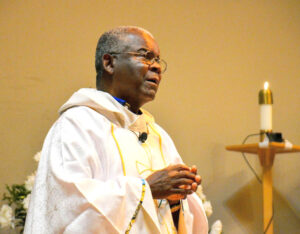
Dear friends, benefactors, partners of Afrique Future,
At the end of this year, I give thanks to the Lord for the journey we have shared together. This annual bulletin provides a simple and faithful summary of the actions carried out by Afrique Future in Cameroon, Europe and Canada, focusing on the most vulnerable and on human dignity.
Since its origins, Afrique Future has been rooted in a deep evangelical conviction: solidarity is the work of faith, and authentic development springs from love in action. Every project undertaken, every gesture made are humble responses to Christ’s call:
‘I was sick and you visited me’ (Mt 25:36).
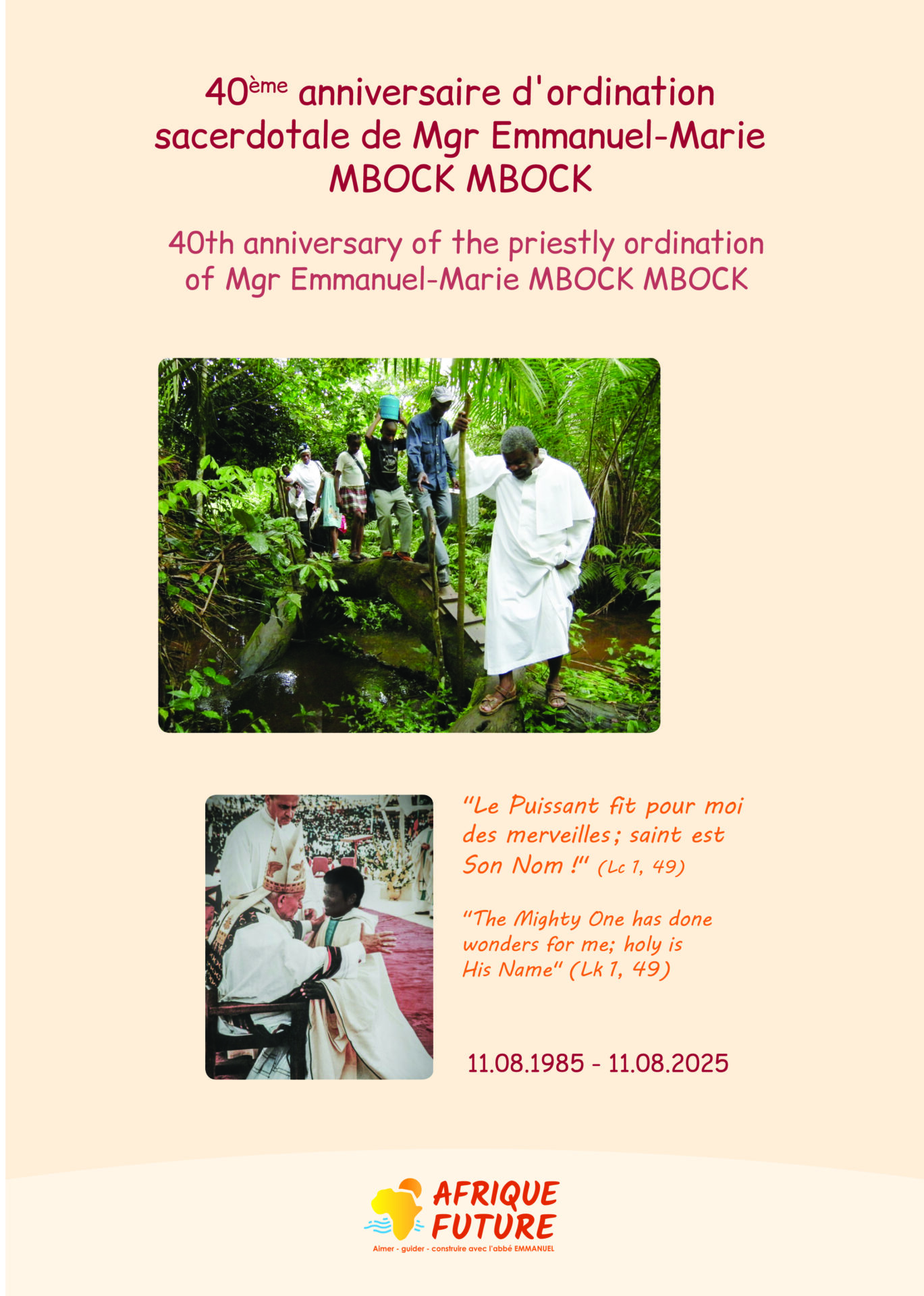
The year 2025 has been a year of special grace for me. Last August, I celebrated my fortieth anniversary of priesthood in Eséka. This jubilee, marked by prayer, thanksgiving and fellowship, was a great moment of gratitude for God’s faithfulness and for the friendship without borders that unites our Afrique Future family.
In terms of projects, one is aimed at empowering rural women and girls in the Eséka region. It places particular emphasis on women’s rights with attractive financing terms for economic micro-projects. This programme, co-funded by the Canadian government, is a sign of hope for women and girls called to become builders of their own future.
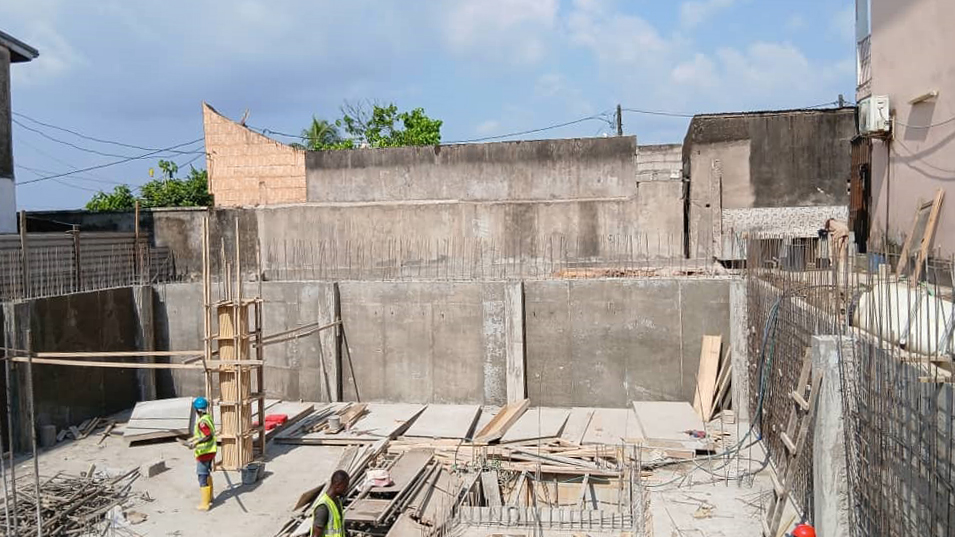
Finally, we have launched work to extend the Afrique Future Deo Gratias Hospital in Douala PK10, with the construction of a mother and child ward. This project aims to provide more appropriate care and a better environment for pregnant women and young mothers, with respect for life and human dignity.
To you all, dear friends, benefactors and partners, I express my deepest gratitude. Your generosity means and leads to true charity.
At this Christmas season and at the dawn of the New Year, I wish you all the following:
– may the Peace of Christ dwell in your hearts,
– may the Joy of the Gospel support your commitments,
– may the Holy Spirit enlighten your decisions,
– may the Lord shower you with His blessing.
And may God keep us all in faithful Hope and fraternal communion!
Emmanuel-Marie Mbock Mbock
______________________________________________
A word for the president
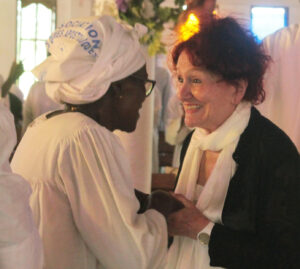 Madame, Monsieur,
Dear Members, dear Benefactors,
“IT’S CHRISTMAS BEFORE CHRISTMAS,” reads an ad, in order to make people anticipate their purchases!
But I prefer the voices in my heart which say :
“IT’S CHRISTMAS ON EARTH”, whenever poverty recedes,
IT’S CHRISTMAS EVERY DAY, because CHRISTMAS, o my brother, is LOVE!
Merry Christmas to each and every one of you!
May your generous heart be flooded with joy – a joy that no one can take from you, as it has already multiplied beyond the seas!
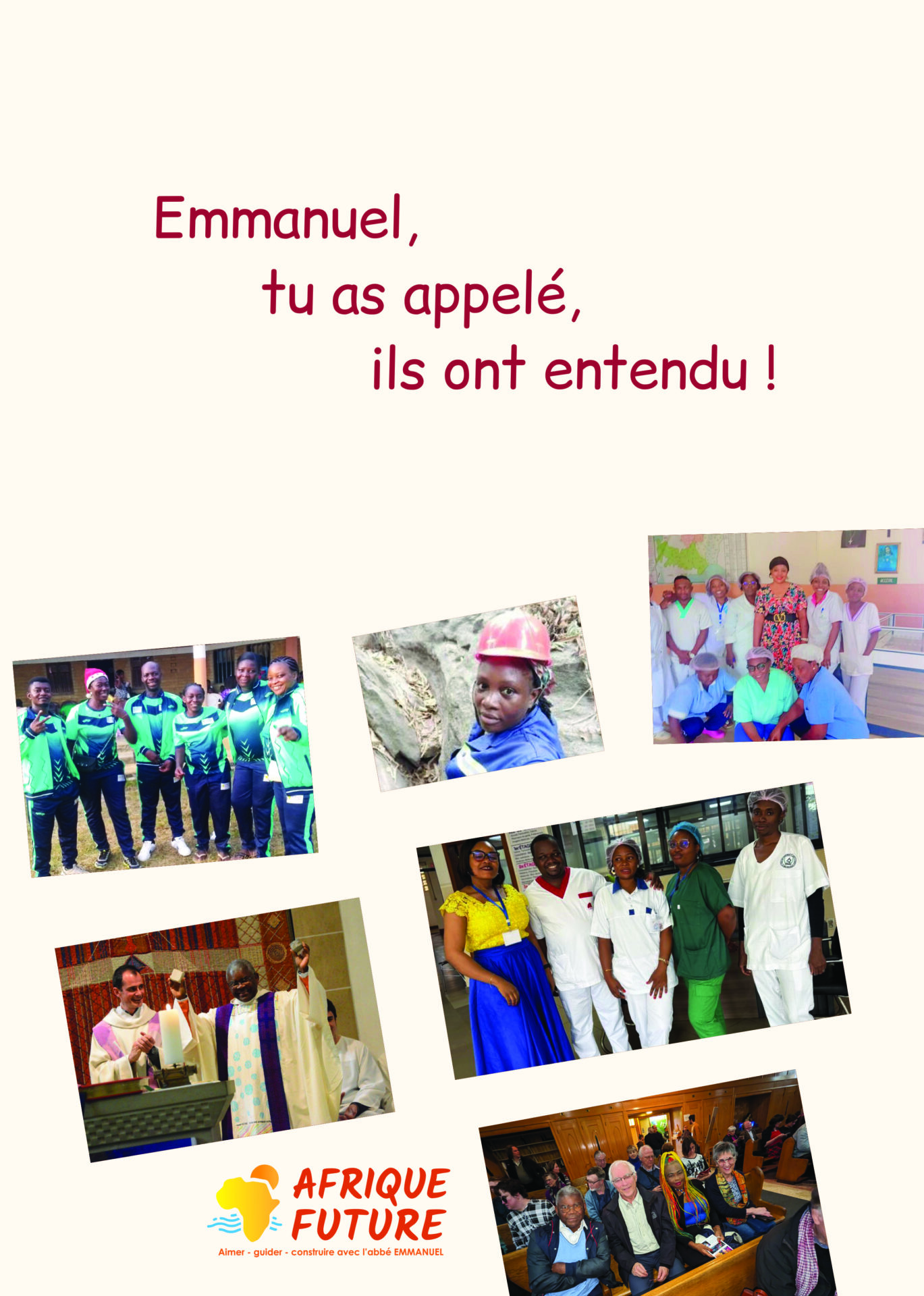
Last August, Father Emmanuel celebrated the fortieth anniversary of his priesthood. Some of us ‘white people’ travelled to Cameroon where our eyes and ears were touched by the good in all its forms made by ‘Afrique Future’. There were numerous moving testimonies of people from all walks of life. The tears we shed were… tears of joy!
We have published a brochure summarising the achievements of ‘Afrique Future’ and those of Father Emmanuel as a priest. We recommend you to acquire it as a ‘souvenir’ but also as a way of sharing ‘dreams turned into reality’.
Our heartfelt thanks to you, dear Members and Benefactors, for your generosity which is the cornerstone of every successful project. We rely on your faithful support and on making your relatives and friends aware of our fight against poverty and our sound financial management.
On behalf of the Board of Directors, I thank you again and wish you a smooth, confident entry into the new year.
Bernadette Escher
______________________________________________
From sadness to joy
This is the title we have chosen for the following article on the life of a widow.
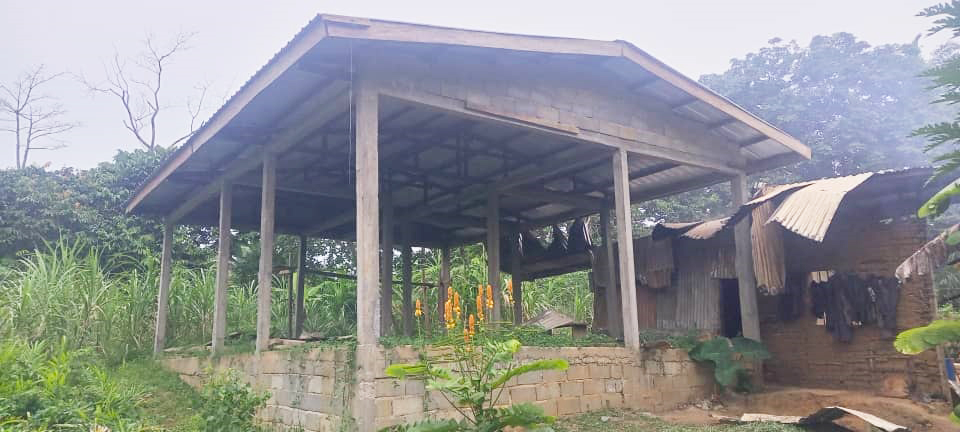
At the dawn of a new year supposed to bring hope for a better life, a widow started the year 2025 in disarray. The house that until now had made her pride was ravaged by fire in broad daylight on January 11, while she was at the funeral of one of her relatives in the South Cameroon region. She lost everything, despite the reactivity of her neighbours who acted as field firefighters for the circumstance. They could not put out the raging flames. A whole life had sunk, we had to act.
On January 18, at Sunday mass, I informed the entire community of the disaster and announced the opening of a petty-cash account to help her. Unfortunately, my proposal met with a very cold reaction and a meagre collection.
Thank God, Afrique Future’s general manager heard the distress call of the widow Mrs. Jeannette TJANG.
Father Emmanuel granted financial aid of 3,000,000 (three million) CFA francs, which allowed us to build a house 8.80 m long and 7.55 m wide – starting work from the excavations to the roof through the foundation and the posts. On November 2nd, Mrs. Tjang praised God for the blessings He had given her. She could not believe that she had again a tin roof over her head.
God does not forget, she had experienced it.
Abbé Leger Damien Bikoi Gouatte,
Priest of the parish of Sainte Thérèse de l’Enfant Jésus, Bondjock,
Diocese of Eséka
______________________________________________
My gratitude
to Father Emmanuel Marie Mbock Mbock.
My name is Edith Kilem Ngan Yamb. I am from the Centre region, in the district of Nyong and Kelle, in the borough of Bot-Makak. I am single and the mother of a 10-year-old boy.
As my parents could not afford to pay for my education, I stopped going to school when I was in Year 10 (end of junior high school).
I applied for a job as a cleaner at the Deo Gratias Hospital in Emana.
 This was the opportunity to tell Father Emmanuel that I wished to go back to school while working as a cleaner, and he agreed to pay for my education from Year 10 until I obtained my ‘baccalauréat’ in science (A-levels).
Soon afterwards, I took the competitive exam for general nursing assistants, a challenge I successfully achieved.
Here again, Father Emmanuel showed great generosity towards me by covering all the training costs, my daily needs and those of my son including his schooling for a whole year.
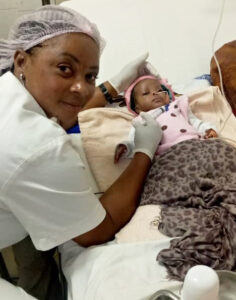
Today I am a general nursing assistant working at the Afrique Future Deo Gratias Mother and Child Hospital in Oliga.
My grandmother once told me, ‘When God lifts someone up, He expects them to serve Him better’.
My life has changed completely; Father Emmanuel helped get out of my silent suffering. I am now a proud, fulfilled woman, socially well established, and I can take care of my little boy.
In return, I intend to devote all my knowledge and energy to serving Afrique Future, our shared home.
And in my own way, I also commit myself to be a watchful ‘Gardener’ who cares for others.
With tears of joy in my eyes, I wish to express all my gratitude to Father Emmanuel, Mrs Anne-Blandine and all the members of the Afrique Future Humanitarian Organisation for the help they provide to vulnerable people.
Édith Kilem Ngan Yamb
General nursing assistant
Afrique Future Deo Gratias Mother and Child Hospital, Oliga
______________________________________________
40th ANNIVERSARY OF FATHER EMMANUEL-MARIE MBOCK MBOCK’S PRIESTLY ORDINATION
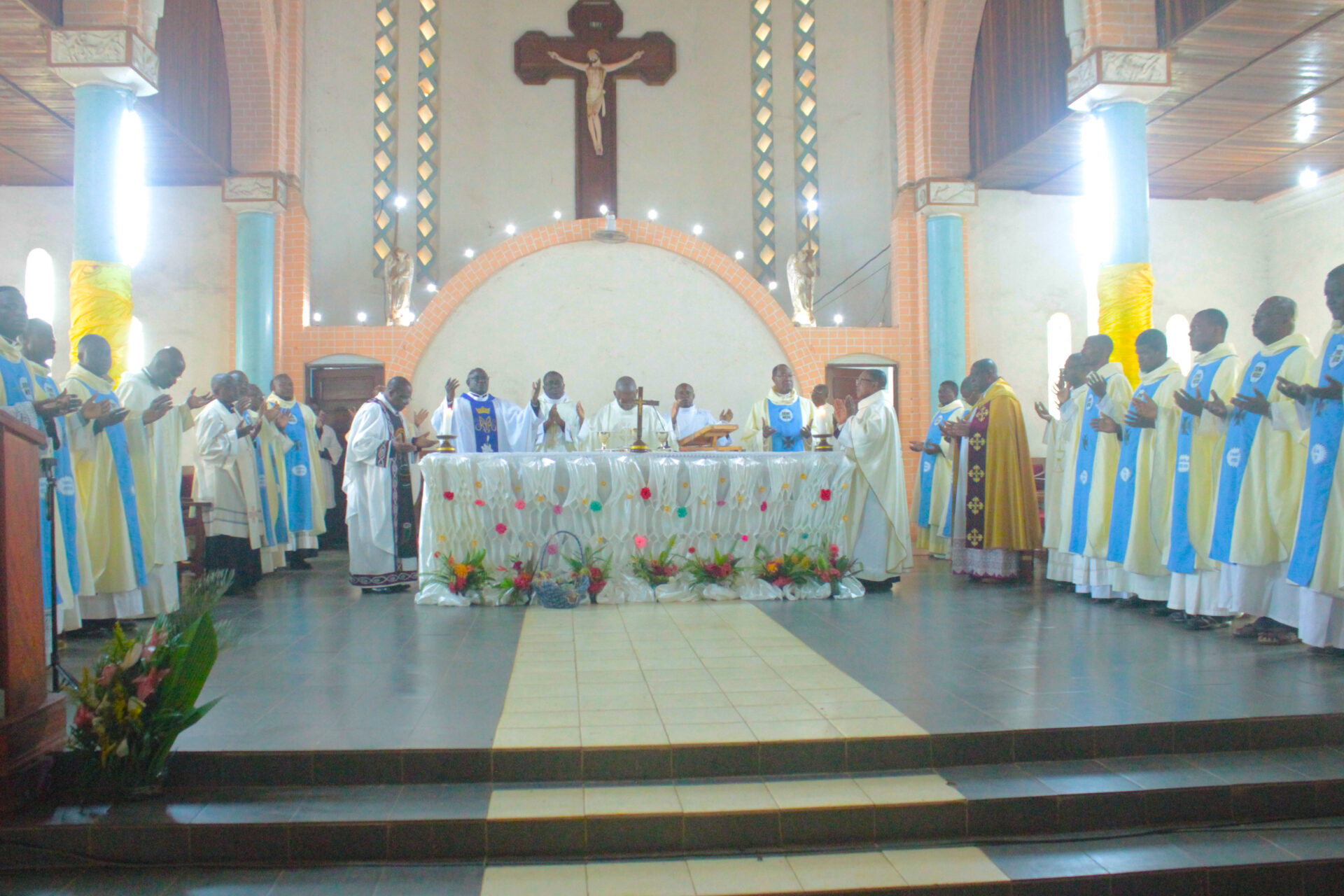
On 11 August 1985, Father Emmanuel-Marie MBOCK MBOCK was ordained a priest in Yaoundé by His Holiness Pope John Paul II. In Eséka, the diocese where he currently serves as Vicar General, a superb mass was celebrated to mark his fortieth anniversary of priesthood, in the presence of his bishop, Bishop Eyabi, of a fellow bishop and numerous diocesan priests, as well as a dozen friends from abroad, including five Germans, one Canadian and two French ladies.
There were many moving moments throughout the service, with numerous testimonies and expressions of gratitude for the various forms of assistance received from Father Emmanuel, whose address was deeply authentic and at times pathetic, and with superb songs and dances. Time stood still for three hours.
Staff from the various A.F. structures also celebrated the occasion in creative joyful ways; a football match between the administrative staff of Eséka and the priests ended in a draw which was a satisfying result for both teams!
As A.F.’editors, we thought it would be interesting to take stock of Father Emmanuel’s achievements by publishing them in a collection including those relating to A.F. and those relating to his pastoral life.
Another collection summarises the messages that people wished to express in writing.
We would like to recommend them to you. Please find below details on how to get copies of the booklets.
______________________________________________
BRIDGES OR WALLS ?
Let’s build bridges rather than walls and bring people together instead of separating them.
This has always been one of the primary objectives of AFRIQUE FUTURE and Father Emmanuel.
Thanks to bridges, many remote villages in Cameroon are no longer isolated. No bridge means no access to the workplace, school, market, hospital, and of course, church. It is like hitting a wall or being stuck between four walls. Yet, walls are not necessarily barriers. They also stand for protection. One feels safe behind city walls and comfortable within one’s own walls. But unsurprisingly, walled-in places can be linked to the outside world by… bridges.
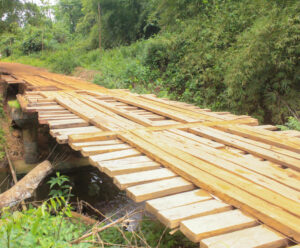
Actually, bridges and walls are made of the same materials – wood, stone, iron, concrete, and are meant to resist troubled waters or any kinds of natural or human attacks. In a way, they guarantee freedom and security.
That is why bridges and walls are not opposites. Father Emmanuel constructs both. As a builder for the Lord, he bridges the gap between urban and rural populations, between present and past, between young and old. What he achieves is more than just another brick in the wall.
Note
I have never been to Cameroon, but I have visited neighbouring countries where I could discover the African bush, rainy seasons, impassable tracks, bustling welcoming villages and warm-hearted people. With AFRIQUE FUTURE, I have become familiar with the spirit of the people, through the texts I translate into English for the association’s website. Automatic translation may be suited for documentary or technical reports, but proves insufficient, if not pointless or misleading, when it comes to personal accounts of local residents, like those published in AF’s bulletins. Here the human translator plays a major role, trying to find the ‘mot juste’ to convey a feeling or emotion, while respecting the authors’ style and thoughts. He sort of gets into their skin, something A.I. or a machine cannot do. Humbly and honestly, this is what allows me to gain a deeper insight into daily life in Cameroon, even if this remains virtual and cannot replace a real experience, of which Marie-Noëlle’s account is a fine example.
Lucien Blech
______________________________________________
AFRIQUE FUTURE IN THE HEART OF FAMILIES
Extension project for the ‘Mother and Child’ ward of the Deo Gratias hospital in DOUALA Pk 10
The Deo Gratias Hospital in Douala PK10 is a healthcare centre run by the Afrique Future Humanitarian Organisation in Cameroon’s Littoral Region. It is a cornerstone of the Cité des Palmiers health district in Douala, thanks to the quality of its technical facilities, the standard of care provided to the public and, above all, the dedication of its staff. Since its opening on 1 July 2014, the years have been rich in many ways for both patients and staff, confirming our ability to improve the degree of care and satisfaction that our people may expect.
Here, we only mention the visible aspects of our work at a collective level; less visible ones of intimate daily life are reflected in the letters and testimonies of thanks that we keep receiving from everywhere. These are tributes to the kindness, strong commitment and excellence of our healthcare professionals. Over the past 11 years, our hospital has steadily made its mark in the Cameroonian healthcare system. We would like to point out that from 7,000 patients treated in 2014, their number reached 19,526 in 2024. This significant growth reflects the increasing demand for maternal and child healthcare, which represents 80% of our patients.
At a time when an increasing number of patients often lack space, support and appropriate follow-up, the present project addresses several key challenges:
1.- To provide more space and comfort for patients: the current wards are in high demand. The extension will help to accommodate more pregnant women, new mothers and newborns in the best conditions.
2.- To provide high-quality psychological support, efficient health education and balanced family planning.
3.- To improve the quality of antenatal and neonatal care, as well as psychological support for expectant mothers.
4.- To increase access to specialist care care by expanding our capabilities of intervention for better life protection.
5.- To fulfil our mission and respond to our vision, in providing a more modern, safer and more accessible environment with optimal care for all our patients and their children.
The construction of the mother and child ward at the Deo Gratias Hospital in Douala Pk 10 is not just a building site or infrastructure. It represents a human commitment powered by a team deeply determined to serve, a promise of hope, and steps towards a state-of-the-art healthcare system closer to the realities of the people from Cameroon and beyond.
To date, the project has reached several milestones:
the technical and architectural studies have been completed.
Both the foundation and preparatory works have begun, the first construction phases are underway. Every brick laid, every wall erected, every coordination meeting are all recurrent sources of motivation.
I would like to express my deepest gratitude to everyone who supports us, stands by us, encourages us, believes in us and helps, even from afar, to improve the standard of care in each of our hospitals. “Together let’s build a better future for mothers and children!”
We move forward with confidence because we know that this project will change lives.
Aline Kombé Alamou, Deputy Director
______________________________________________
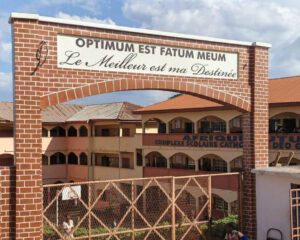
AT EMANA’S DEO GRATIAS CATHOLIC SCHOOL COMPLEX: “INNOVATE TO EXCELL !”
Don’t they say: “Who seeks perfection obtains excellence”?
Emana’s Deo Gratias school has the ambition to rise to the top of academic excellence in Cameroon. This requires innovation in the teaching and learning practices. The year 2025-2026 started effectively on 8 September 2025 with lessons in all classrooms. Students, teachers and administrative staff were all present by 7 am.
To establish this new vision, a staff general meeting was held on Friday 12 September 2025 to review the previous academic year and lay solid foundations for the smooth functioning of the new 2025-2026 academic year.
The review of the previous year shows that, despite the school’s excellent working and learning environment, academic results did not meet the high targets set. However, they were 100% for the BEPC (end of first cycle exam), 82.76% for the Probatoire (challenge exam) and 75.89% for the Baccalauréat (A- levels), and these results in official examinations have had an impact on our school population. From 548 pupils in 2024–2025, we have risen to 600 pupils at the start of the 2025-2026 academic year. It is vital to maintain and build on this momentum, hence the slogan “Innovate to Excel”.
The 2025-2026 academic year at Emana’s DEO GRATIAS Catholic School is packed with lots of innovations designed not only to improve results but also to enhance our learners’ exit profile so as to make them more competitive. A number of initiatives have been devised and incorporated into the school project. These innovations cover all aspects of life at our school and include the following:
At the administrative level:
- Creation of new posts: Strategic Advisor, Deputy Head of Studies, Deputy Head of Supervision, Head of Educational Guidance, and Morning Study Supervisor
- Provision of all regulatory documents
- Drafting of management documents
- Taking charge of all aspects of the school
At the teaching level:
- Monitoring the quality of lessons
- Increasing the frequency of inspections
- Holding evaluation meetings at the end of each didactic sequence (with pupils, teachers and parents)
- Follow-up of pupils in difficulty
- Remedial work and revision sessions to prepare students for official exams
In terms of discipline:
- Approval, dissemination and enforcement of the school rules
- Provision of a pupil correspondence book for regular communication between parents and school administration
- Educational talks with pupils and parents
At the socio-environmental level:
- Dissemination of the new health regulations
- Smooth functioning of our clubs through local supervision
- Appropriate guidance and advice provided by a school and careers councellor
In terms of infrastructure and equipment:
- Purchase of new digitalisation kits to enhance learning
- Distribution of classrooms for improved monitoring of pupils
- Providing the library with textbooks and various documents
- Equipping the computer room, the science and language laboratories
We can already see the impact of these innovations on academic performance following the first assessment: an overall pass rate of 74.16% which is higher than last year’s 68.44%.
It goes without saying that certain difficulties are inevitable, such as:
- Non-payment or late payment of school fees and examination fees
- Overcrowded classes in some year groups (Year 8 and Year 10)
- Disorder in Year 10 and Year 11 classes
Some solutions to these difficulties have been outlined:
- Working sessions with parents to address school-related issues
- Two disciplinary councils for Year 11 pupils in the presence of their parents; involvement of the school chaplain to provide spiritual guidance, as it cannot be ruled out that an evil spirit haunts this class in view of the African context.
Finally, we plan to open an English-speaking section, a human sciences option, and we request the construction of new classrooms.
We are convinced that with the support of the school management and of the parents, the determination of the students and the commitment of the teachers, we will succeed in raising Emana’s DEO GRATIAS Catholic School to the peak of excellence.
Moïse BOUMAL,
Strategic Advisor at Emana’s DEO GRATIAS Catholic School Complex
______________________________________________
FAREWELL NGONO AKOUDOU
Emana’s Deo Gratias School Complex mourns the loss of its pupil.
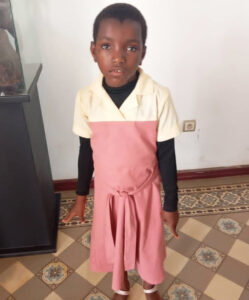
NGONO AKOUDOU Rachel Sylvie, born on 4 June 2016, died on 10 October 2025 after drowning on her way home from school. Heavy rain had fallen for hours; the ‘AKO’ river, not far from the School Complex, flooded, and the small makeshift bridge collapsed. Poor little Rachel was swept away by the waters while trying to cross to the other side to reach her family home, in front of her classmates who shouted desperately for help.
The sad news spread throughout the school complex. The teachers still present went to the Deo Gratias Catholic Hospital which had received little Rachel’s lifeless body, then gathered at the home of her parents. The body was taken to the mortuary at the CFTA (Training Centre for Armed Forces Technicians).
From that day, songs and prayers were heard in the classrooms in memory of NGONO AKOUDOU Rachel.
The school community mobilised to ensure the smooth proceedings of the funeral and to accompany little Rachel to her final resting place.
Teachers paid visits to offer comfort; and so did Founding Father Emmanuel Marie MBOCK MBOCK who had celebrated the funeral mass.
All Afrique Future’s institutions in Yaoundé offered the school complex their support and assistance.
We all mourn NGONO AKOUDOU Rachel Sylvie.
On Friday 31 October 2025, all the teachers were present when Rachel’s body was carried to the parish of Notre Dame de Meyrouba. On Saturday 1 November 2025, some of them went to the village of NTUISSONG near Oveng (in the Centre Region, Mefo Akono district, Mbankomo borough), where Rachel’s remains would be kept.
Has this tragedy opened the eyes of the administrative authorities? We believe NOT. It is yet another death of a poor, innocent child due to negligence and carelessness.
We can never thank the general manager Anne Blandine NGO TIGYO enough for her assistance and support during our pupil’s funeral. We are deeply grateful to Father Emmanuel Marie MBOCK MBOCK for his genuine support and availability. We express our sincerest thanks to the entire educational community of Deo Gratias Emana for their solidarity.
Farewell, dear NGONO AKOUDOU Rachel Sylvie, you will live forever in our hearts.
“He who gave took away; to Him alone be the Glory”
BILLONG Marthe Josiane,
Deputy Head of Emana’s Deo Gratias Nursery and Primary Schools
______________________________________________
SUMMARY OF A CLINICAL CASE AT THE MATERNITY WARD OF DEO GRATIAS HOSPITAL, DOUALA PK10
In the current year, we have admitted countless cases involving critical maternal or materno-foetal conditions. However, one case in particular has left a lasting impression on us, and we would like to share it with you.
One morning in February, Mrs X, aged 31, G3P2001 (with a history of perinatal death due to a difficult delivery), was admitted to the emergency ward. She had no significant medical or surgical history. She arrived in a taxi, supported by her sister, her face contorted with pain. Her eyes sought help, and she was short of breath. She had no referral form, having been sent from a health centre for better care at our facility.
The midwife rushed over, helped her onto the stretcher and, in a firm but reassuring voice, said: “Breathe, madam, we’re here for you.”
Her medical record revealed that she was a woman in labour who had received inadequate care (only two antenatal consultations throughout her pregnancy), with a previous history of delivering a macrosomic baby and gestational diabetes that had not been identified in the antenatal assessment.
The diagnostic examination revealed a woman in the active phase of labour, with the baby’s head appearing cyanotic at the vulva. We immediately concluded that this was a case of shoulder dystocia (a complication of childbirth in which the foetus’s shoulders become stuck in the mother’s pelvis while the head has already emerged); the foetus was evidently already dead on arrival.
Within seconds, the room sprang into action. An IV drip was set up. The alarm was raised and the entire maternity ward team, along with the operating theatre team, took their positions. Time seemed to stand still; the woman’s sister watched her with tears in her eyes.
The teams, meanwhile, moved with pinpoint precision: everyone knew exactly what they had to do. Hearts were pounding, not just that of the patient’s sister, but that of the entire team who knew that every minute counted
The doctor spoke, his empathetic tone conveying a sense of control over the situation, and said: “We’re going to help you get through this. You’re not alone.”
In the operating theatre, with the patient under sedation, we carried out a complete removal of the foetus using complex procedures that our teams performed with great skill. The mother had come through with a few vulvar tears which could be sutured.
A few hours later, the patient was resting, exhausted but out of danger. The ordeal had left visible and invisible scars, but the team had managed to preserve what mattered most: her life.
Around her, the silence was heavy, yet it also carried a newfound strength. She had survived. And in this struggle, she had discovered the power of solidarity, of human warmth which, even in the darkest night, can rekindle a spark of hope.
Her family, together again, looked at us with eyes filled with a mixture of wonder and sadness. Sadness because of the tragic loss of a 5,200-gramme baby who never saw the light of day.
This story highlights the importance of high-quality care for pregnant women in our health zone, as well as the importance of effective referral systems for better management. To address this, we place emphasis on educational talks held during monthly health zone meetings to empower lower-level health centres, namely to identify risks and to refer patients in good time to higher-level facilities such as ours.
A health zone is a subdivision of a health district within a defined geographical area for a specific population. The Deo Gratias PK10 Hospital is part of the Madiba zone which comprises eight health centres for a given target population.
The 2025 allocation ranges specify that our hospital must cover 20,900 people.
Dr Famo, gynaecologist and chief medical officer of the Deo Gratias PK10 Hospital
______________________________________________
INNOVATIONS AND ACHIEVEMENTS OF AFRIQUE FUTURE’S LABORATORY TEAMS, YAOUNDE
Venue: Conference Room, Deo Gratias Emana Hospital, Yaoundé
The first training session for laboratory staff at the Afrique Future Hospitals in Yaoundé took place on 15 November 2025, marking a decisive step in their continuous improvement approach.
The main objective of this meeting was to initiate a process of harmonisation and standardisation of serological analysis practices, in accordance with the requirements of the international standard ISO 15189. The event brought together a diverse range of participants, including laboratory technicians, clinical pathologists, a university lecturer, a quality manager and supplier partners, all united by a common goal: excellence in patient care.
The harmonisation initiative launched by the Afrique Future Laboratories addresses a critical issue. Prior to this initiative, it was observed that the results of some tests could vary significantly from one laboratory to another. This variability was mainly attributable to two factors: the heterogeneity of the equipment used and the absence of a common regulatory framework, both at national and international level.
In a scientific context where the accuracy and reproducibility of results are paramount, this situation posed a risk to the reliability of diagnoses. Furthermore, modern medical science requires the implementation of robust quality management systems. These systems are essential for ensuring rigorous monitoring of processes and for allowing continuous improvement to guarantee optimal customer satisfaction, whether for prescribing doctors, patients or management.
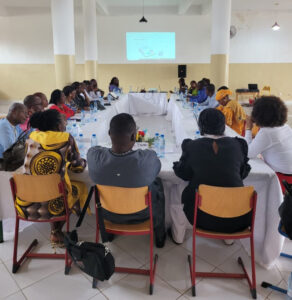
The session was opened by the organiser, Mrs BIHENG Kelly, née MATCHOU, (Laboratory Manager and Quality Manager at the Afrique Future Deo-Gratias Mother and Child Hospital in Oliga), who emphasised that the reliability of laboratory results was a key determinant of the quality of clinical care. She stressed that adherence to the requirements of the ISO 15189 standard was essential to guarantee this quality, enhance the comparability of results between laboratories and meet the expectations of all stakeholders.
The technical presentations, made by Mrs Anastasie NGOATEU and Mrs Carole NGO NLEND, provided a comprehensive overview of the methods, equipment and reagents used in both laboratories. Particular emphasis was placed on the distinction between qualitative, semi-quantitative and quantitative techniques, as well as on the rigour necessary at each analytical step of the process – pre-analytical, analytical, post-analytical.
The visiting lecturer, PhD candidate Piameu Michael, then presented a scientific overview of the applicable international standards (ISO 15189, ISO 9001, ISO 13485, ISO 22870, ISO 35001) and national standards (the Guide to Good Laboratory Practice, the Biosafety Guide), stressing the criteria for selecting medical devices, the mastery of technical procedures prior to any analysis, the implementation of an institutional quality policy, the need for a dedicated quality manager, and the imperative for an organisational culture of safety, rigour and non-compromise.
The discussions that followed showed the participants’ desire to consolidate technical knowledge, strengthen continuing professional education, ensure harmonisation of practices and improve resource management, particularly with regard to the use of LIMS (Laboratory Information Management System).
The suppliers BEDIA and ANBIO presented, on the one hand, their ranges of equipment and reagents, offering concrete prospects for improving diagnostic capacity. On the other hand, they offered expertise dedicated to checking the compliance of kits prior to distribution. It must be noted that their involvement was not merely technical; their financial contribution was decisive, covering a substantial part of the event’s total budget.
At the conclusion of the session, several key resolutions were adopted. These decisions will serve as a defining milestone in the establishment of a harmonised and functional quality system. The session ended with a post-training assessment which highlighted the participants’ overall satisfaction and their collective commitment to implementing, without delay, the knowledge and practices acquired.
This meeting marks a decisive turning point for the Afrique Future Laboratories. It lays the foundations for sustainable harmonisation, strengthens quality culture and initiates the organisational transformation necessary to align our local clinical laboratory services with international standards. Through this initiative, the Afrique Future Laboratories assert their ambition to become a national benchmark for quality, diagnostic reliability and standards compliance. This dynamic in improving skills has already been crowned with success: the Deo Gratias-Emana laboratory was ranked best in the national certification programme for HIV sites and service providers by the Cameroon Public Health Laboratory.
Mrs BIHENG Kelly, née MATCHOU
Laboratory Manager and Quality Manager at the Afrique Future Deo Gratias Mother and Child Hospital in Oliga
______________________________________________
ALONE IN THE WORLD
The misery of my people is worthy of pity. Unfortunately, we cannot understand or control everything, but our duty is to do our very best.
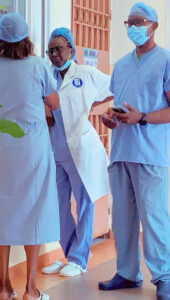
Robert, aged 59, was admitted to the Deo Gratias Hospital in Emana on 6 December 2025 at 10.50 am in a state of functional impairment, characterised by a productive cough, asthenia, a memory disorder, palpitations, burning on urination and severe dehydration, with a necrotising ulcer on his left leg.
His face was swollen and his lower limbs were oedematous. His unkempt appearance was a sign of social distress. His companion in misery who had brought him in made a quick escape under the false pretext of going to fetch money.
We found ourselves with an abandoned patient, without friend or kin, without social assistance.
Despite his critical condition which required transfer for better care, the hospital took him under. A battery of tests was carried out and the diagnosis revealed congestive heart failure associated with bullous gangrene of the lower limbs.
The social services which are supposed to handle such cases, shirked their responsibilities on the pretext that the patient had no caregiver, while the police kept putting off their help indefinitely, despite our repeated calls.
All attempts to trace his family with the telephone directory had proved fruitless. Only one relative had deigned to listen to us, then chose to ignore our calls.
In view of his complex medical problems, we took care of him:
-
-
- he received the medical treatment available at our level;
- the nursing staff provided personal care. Sheets and clothes received from Western friends were used to make up his bed and improve his appearance;
- he was offered meals and drinks.
-
On 9 December 2025 at 5 pm, Robert passed away quietly and went to a better place.
There’s a saying that ‘the police only turn up after the crime’. So, when the death was reported, they rushed over, insisting ‘without mincing their words’ that their fuel costs be paid (22 euros).
The next step in the procedure was to send the body to the investigation unit. Here again, it was like something straight out of a Nollywood film. It was up to us to transport the body. The research brigade sent us this message: “If you don’t have a vehicle to transport the body, you’ll have to eat it.” What choice did we have?
Even after the deposit of the body which would probably end up in a mass grave, our troubles were not over; we had to pay the procedural fees (14 euros).
How long had this man been suffering in body and soul? We will never know. We have not got the power to change things, and we will not be heard. But the nursing staff at Emana’s Deo Gratias Hospital accompanied the man with dignity to the house of his Creator. To this day, no one has cared to check up him or claim his body. Yet, in Africa, family is important and rather large. Even when a sick person with no support dies, people never fail to claim the body and to mourn the deceased, with an eventual celebration.
Is a change of attitudes possible in Africa? Maybe when pigs fly…
Or shall we, like Diogenes the Cynic with his lantern, go on looking for an honest man?
Of course not! The smooth functioning of Afrique Future’s structures and services, in particular its schools, fortunately proves the opposite!
Anne Blandine NGO TIGYO,
Deputy Manager of Emana’s Deo Gratias Hospital
______________________________________________
GOING TO CAMEROON
A trip to Cameroon?… Never the right time, my professional constraints tell me. Yet the date of the decision falls… I’m going!
The plane takes off and the adventure begins right at Paris airport. In the hustle and bustle of his daily life, Father Emmanuel informs Bernadette and me that we are to speak at the Labour Day celebrations on 1 May, and today is 29 April! To prepare a speech on ‘Social dialogue in the world of work’ during a few hours’ flight is a high-wire act… with no free time left. Such is the rhythm of Afrique Future! I think a moment, daunted by the task, but realise the vital role that my faith plays in my commitment to Afrique Future.
I pray, I’m confident – a leitmotif that will fuel my adventure!
The first day is rich in encounters: a warm welcome at Oliga Hospital, visits to the various departments, exchanges with staff and patients who express their gratitude. I will find this same atmosphere in each of our hospitals and schools. The inevitable problems do not prevent emulation – a real emulation I can feel, not a faked one, a dynamic aiming at the common good.
Now comes the journey into the bush to Ngodi-Si, Father Emmanuel’s home village, through districts of Yaoundé, on tracks that would make our dirt paths look like major roads! Disparate crowds of pedestrians, taxi cars (often dilapidated), overloaded motorbike taxis… Dangers at every turn, numerous accidents avoided miraculously or else causing serious or fatal injuries.
At last, the bush trail! I’d rather close my eyes (and spare you the details!), but we arrive.
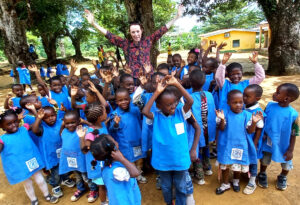
I am overwhelmed by my encounters with the local people who are so welcoming, smiling and cheerful despite the obvious daily difficulties. I am deeply moved to meet the pupils from the different classes (nursery, primary, secondary). Children I had previously only seen in photos are now standing in front of me for real. They recite their welcome message with application. Together, they express their gratitude gracefully and in return I offer them my tears of joy!
We travel back to Yaoundé in a storm announced by thick threatening clouds and arrive at destination in torrential rain – a nightmare journey for me.
Without delay, I send photos of my wild journey to some friends in France. One of them replies: “Well, you’ve had your fill now, you won’t be going back!” Has this experience really put me off? Certainly not!
Experiencing first-hand how the impossible becomes possible because a man believes in it and because so much is at stake, opens up new prospects and – follow my eyes – concerning Father Emmanuel, expands the heart. Deciding to help means ignoring the hellish, muddy, rutted tracks, torrential rain and fallen trees.
As a hero apprentice, I admit that fear catches up with me at Ngodi-Si. Spending the night there would be sensible, but the decision isn’t mine to make. So we set off, and I tell myself that we’ll end up in a ‘hellish rut’. Even Father Emmanuel hesitates for a moment: “If we get stuck over there, we won’t be moving. Shall we turn back?” he says to Eloi, our experienced driver who, however, persists in his efforts and manages to keep on the track. A little further, he cuts through a fallen tree with his machete.
When ‘work’ goes hand in hand with ‘commitment’, it’s worth celebrating! Forget the French ‘Fête de l’Humanité’! A series of colourful events are planned for Labour Day: a conference on social dialogue in the working world, a mass, speeches… and finally, a buffet served by the staff – a celebration in line with Afrique Future, one of sharing. I even dare perform a few dance steps to the rhythmic music.
To join in this ‘dance’, it’s best to let go of one’s ‘stiffness’ and ‘restraint’! It’s excellent exercise, a truly all-round experience, and an expansion of the heart as a bonus!
The next days are rich in emotions and raise all sorts of questions. I realise how smiles can mask worries and I feel a ‘knot in my stomach’. I have always been aware that Father Emmanuel leads a life full of responsibilities. But living in the flesh the myriad difficulties he has to face in physically harsh conditions allows me to see my commitment in a new light and to further increase my desire to take action!
This visit to Cameroon has left a deep impression on me and every day I think of what I experienced, what I did, what I could give and, also, what I received. It was a powerful emotional shock and is now a kick in the behind whenever my courage falters.
In conclusion, I can tell you that Afrique Future addresses real needs. I can testify that Afrique Future’s actions are bearing fruit and that the benefits to the local population are both visible and numerous.
It may be a drop in the ocean of misery, but I have seen first hand how effective our work is. I was amazed at the commitment of the workers who have fire in the belly. I discovered that the staff in our hospitals organise in solidarity with the poorest.
With so many faces and names, planet Earth is certainly worth living on, provided Love shines upon it!
Marie-Noëlle MEYER-WEISS
______________________________________________
THE EMERGENCE OF RURAL WOMEN IN THE BASSA REGION
‘Project for the Empowerment of Women and Girls in Rural Areas’
As a strategic territory due to its geographical position and as a bridge between the political capital (Yaoundé) and the economic capital (Douala), the Department of Nyong-et-Kellé (NEK) reveals all the beauty and diversity of Cameroon in miniature. It lies at the very heart of the Centre Region and is brimming with all the advantages associated with its agro-ecological situation. Halfway between the coast and the forest zone, it is a prime location for agro-pastoral activity.
But the best thing about Nyong-et-Kellé is undoubtedly its people, a population hitherto numbed by the precariousness and fragility of their daily lives, fighting tooth and nail to restore the reputation of a people (the Bassa people) once known for their valour. It is as though the pervasive poverty plaguing the area has left an indelible mark on people’s minds and, with it, stifled all efforts towards development.
The department, home to Cameroon’s largest river, the Sanaga, with an estimated hydroelectric potential of nearly 10,000 megawatt-hours and powering no fewer than three hydroelectric dams, is still struggling to find a way to banish darkness. The virtual absence of electricity and power cuts hinder development. The nearly 2,273 kilometres of paved roads within the department’s 6,372 km² area stand in stark contrast to the reality of the isolation faced by this department.
What about basic social infrastructure? The hospitals are hospitals in name only; the technical facilities and the profile of the staff on duty speak volumes about the services provided. The scarcity of drinking water supply points is a threat to public health. Here, mobile network coverage is intermittent, to the point of giving way to old-fashioned methods of communication, such as sending a messenger or writing a message on a roadside sign for the recipients: ‘Here, for Afrique Culture, from Mama Joséphine’. The rough spelling is equally revealing of the area’s low literacy rate.
Against this gloomy backdrop, she – the rural woman – stands surprisingly proud and stoic, rising above all the turmoil of a region in oblivion, amidst the upheavals of the past that established Nyong-et-Kellé and the village of Eseka in particular as strongholds of opposition to the power eternally held by a minority, in the middle of other projects nipped in the bud from the very start; she is now able to demonstrate her resilience and know-how with the arrival of the Project for the Empowerment of Rural Women and Girls in Cameroon (PAFFC).
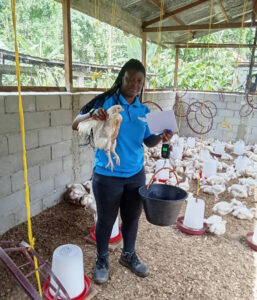
Against all expectations, she responded positively to the call for development issued by the PAFFC, launched by Afrique Future. She put aside her selfish inclinations to make way for the spirit of solidarity and mutual support promoted by the SOFRAAF initiative (Solidarité Féminine Rurale Agissante Afrique Future). These small groups of women are the teams of local development and have been key players in the implementation of agro-pastoral activities since the launch of the PAFFC (Project for the Empowerment of Women and Girls in Rural Areas).
In the first year of the project, they received just over 100,000 agricultural seeds (plantains, cassava, pistachios, etc.), 8,100 chicks for poultry farming, 18,000 fingerlings for fish farming, and a wide range of modern production equipment.
More than 53 beneficiary rural women’s associations through 26 groups in Nyong-et-Kellé have seen their small income-generating activities boosted. These figures are suggestive of the scale of the project, but above all of the commitment of the rural women who have managed to turn their marketed products into a turnover of around 13 million CFA francs to date. The whole community has been transformed; farms that were once plunged into darkness are now bathed in light, and night-time monitoring is possible thanks to the provision of solar streetlights.
Chicken which was sorely lacking in the villages of Bondjock, Bomabom, Eseka and Mom-Dibang, is now overabundant so that it not only meets local demand but also supplies regional markets.
It is no exaggeration to say that the PAFFC (Project for the Empowerment of Women and Girls in Rural Areas) has strengthened food security in the NEK department. As for women’s purchasing power, some have already seen it double as a result of the project.
But the real benefits of the project for rural women in NEK are to be found in the ‘cooking pots’. Several women involved in the PAFFC say they eat better and healthier with family. Cassava leaves, cassava, pistachios and macabo are all products that now fill the shopping basket at affordable prices.
In just a few months, rural women have become the missing development lever for the growth of a neglected region; their heartfelt plea materialised into acts and the results are now evident.
There is no doubt that, from now on, development in Nyong-et-Kellé will be women’s business, with rural women taking the lead in providing solutions to the current problems of their communities. In light of this rapid transformation brought about by the rural women of NEK, the following assertion can be made: ‘When the rural women of Nyong-et-Kellé rise up, the whole of Cameroon will tremble’.
Emmanuel MOMHA MBOCK, Environmental Engineer and Director of Field Operations
PAFFC (Project for the Empowerment of Women and Girls in Rural Areas)
______________________________________________
AFRIQUE FUTURE IN THE WEST
AFRIQUE FUTURE Germany
At Epiphany, according to the charming and rich tradition of the ‘Three Kings’, 70 young people in Kork (at the initiative of Theresia Lochow) and 36 young people in Nuremberg (at the initiative of Heike Traub) went from house to house. Divided into groups of three accompanied by an adult, they sang Christmas carols and the residents welcomed them by giving them a donation. The funds raised were as usual donated to K.M.W., an organisation that supports education in the developing world, including our school complex in Ngodi-Si. To ensure this aid is put to good use, we draw up precise annual reports on the allocation of funds.
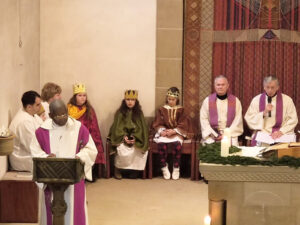
In Saarland, Elisabeth Himbert organised an ‘open day’ and two solidarity meals at the school where she teaches, in aid of Afrique Future.
In Kork, on 14 December – ‘Afrique Future Sunday’ – the anniversary of Father Emmanuel’s ordination was celebrated with joy, bringing together many parishioners for a convivial meal.
AFRIQUE FUTURE CANADA
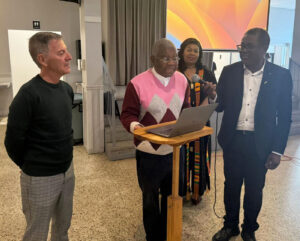
On 10 May, the annual ‘benefit dinner’ was an opportunity for people to meet, exchange views and learn about activities in Cameroon, and helped to raise funds. It was a pleasant, interesting evening. Father Emmanuel was there as usual, bearing witness to the latest developments in his country and acting as a ‘physical link’ across the seas.
Administrative officials, known for their roles as ambassadors or directors of services within Government Cooperation, have joined A.F. They are working towards the completion of projects co-funded by their countries, such as the current one : Empowerment of Women and Girls in Rural Areas.
AFRIQUE FUTURE France
Once again, Mr Heinis offered us a space at the Waldighoffen trade fair where Daniel and Michel set up our stall, for a four-day period from 28 February to 3 March, to sell coffee, peanuts and African artefacts. In the current economic situation, it becomes increasingly difficult to raise awareness of poverty in Africa, but our presence generates some much-needed funds.
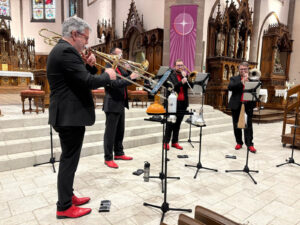
On 9 March, the quartet ‘Les Trombinacoolos’ gave a superb concert in St Geneviève’s Church, opened free of charge for us.
On 26 October, the ‘Celtic Ried’s Pipers’ gave a magnificent concert in the Basilica of the Sacred Heart in Lutterbach.
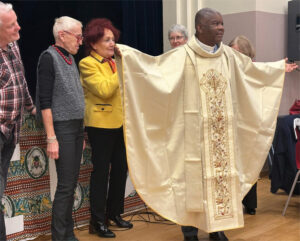
On 16 November, on ‘A.F.’ Day in Pfastatt, mass was led by the African choir ‘Kekeli Gospel’ to the delight of the celebrants, including Father Benjamin Kafala from the Central African Republic, who had been specially invited on the 40th anniversary of Father Emmanuel Mbock Mbock’s ordination. The parishioners applauded enthusiastically the unfamiliar, joyful, rhythmic tunes which reminded some of them of the lively masses deep in the Cameroonian bush. At noon, delicious sauerkraut from Maison Eckert was a delight for the palates of the numerous participants, much to our satisfaction. A.F.’s board of directors presented Father Emmanuel with a chasuble on the 40th anniversary of his ordination.
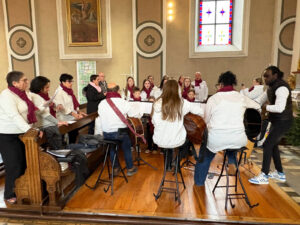
On 30 November, the first Sunday of Advent, now a lovely tradition, our friends from Hégenheim celebrated Afrique Future during a mass superbly led by the Youth Choir with their African rhythms, alternating with the excellent parish choir.
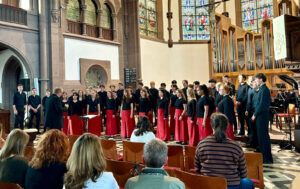
Anita, currently president of the Schopfheim Rotary Club, organised several events for A.F. with generous results, including a musical evening featuring the THG School Orchestra and the Chamber Choir of the Helmholtz Gymnasium Karlsruhe.
Last but not least, we organized once again our ever popular ‘champagne’ and ‘cupcakes’ sales campaigns in November and December.
______________________________________________
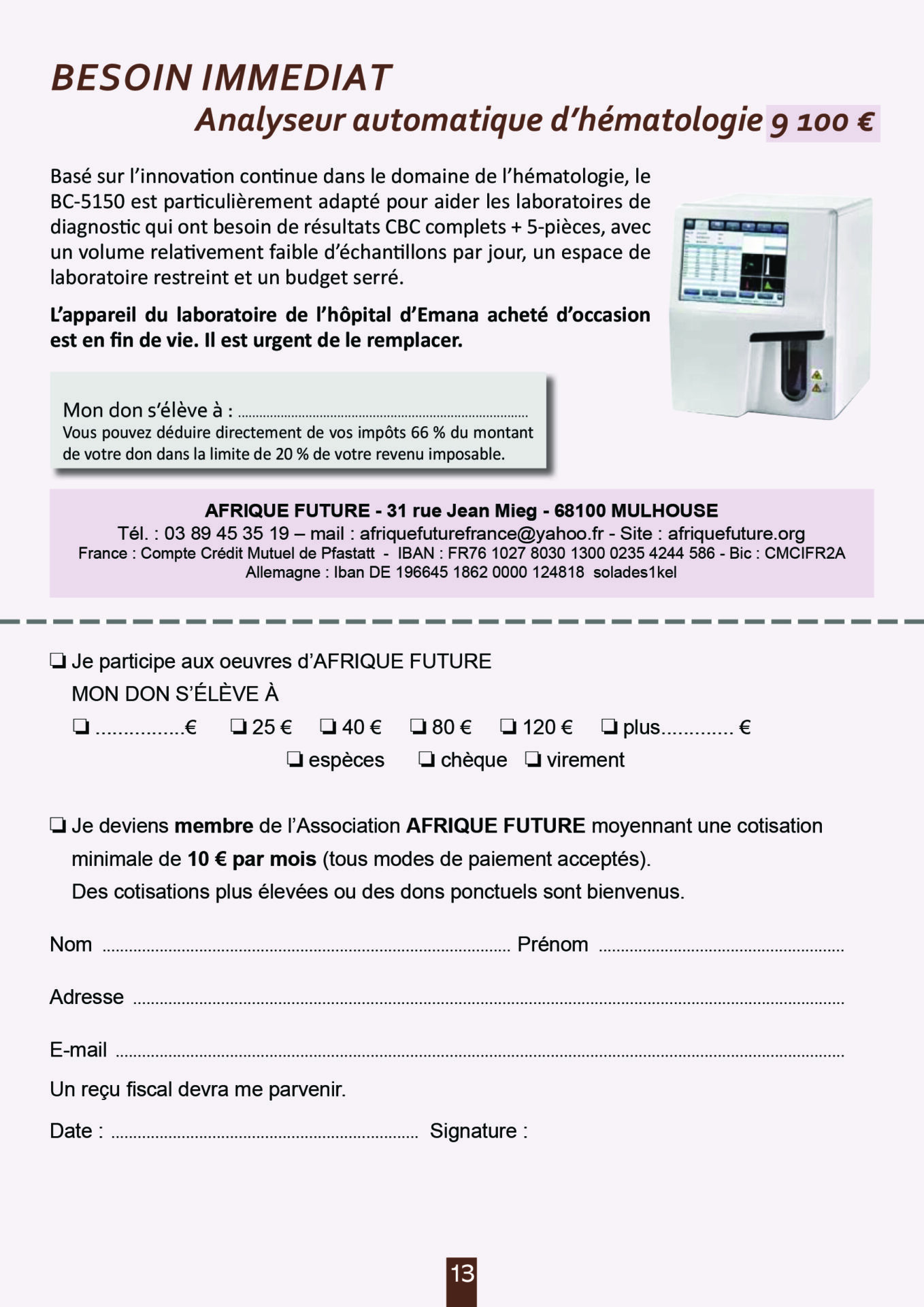
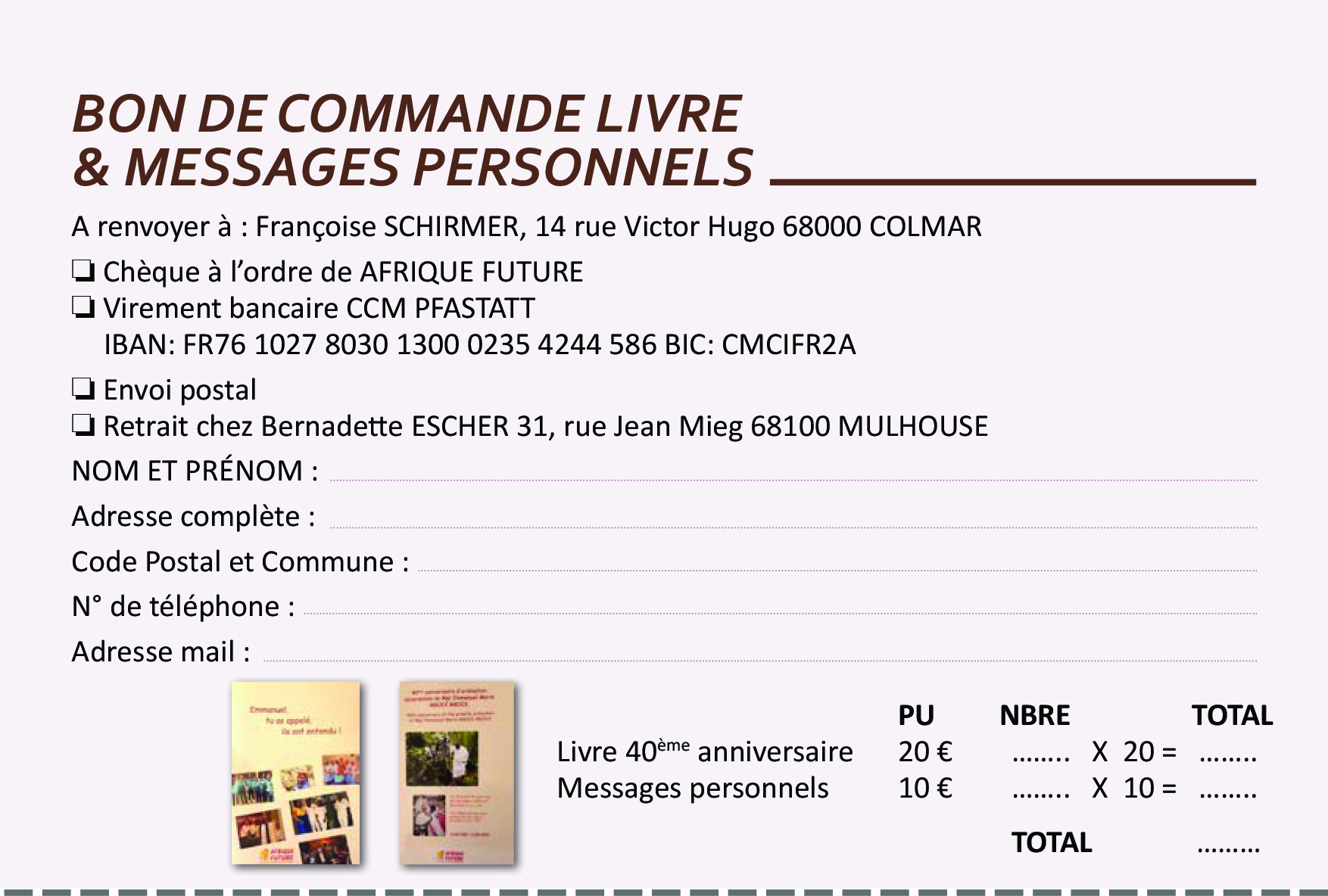
ORDER FORM FOR BOOK AND BROCHURE
To be sent to : Françoise SCHIRMER…, France
- check payable to AFRIQUE FUTURE
- bank transfer
- shipping by mail
- withdrawal at Bernadette…, France
FIRST NAME AND LAST NAME :
Full address :
Postcode and city :
Phone :
E-mail :
Qty
BOOK 40th anniversary : 20 € … x 20 = … €
BROCHURE Personal messages : 10 € … x 10 = … €
Total : … €